
Le Chemin fleuri

It’s all about the flowers
In May, my friend Claude and I completed the second half of one section of the Chemin de Compostelle, or Camino de Santiago. The full section starts in Le-Puy-en-Velay and finishes in Conques. You can read about it here. For last year’s two posts about the first half of this section, click here and here.
I always make photographs of flowers, and in May, the flowers were abundant. Because I had so many photos, I decided to do a second post that’s all botanical. I’m also going to try doing this one in both English and French.
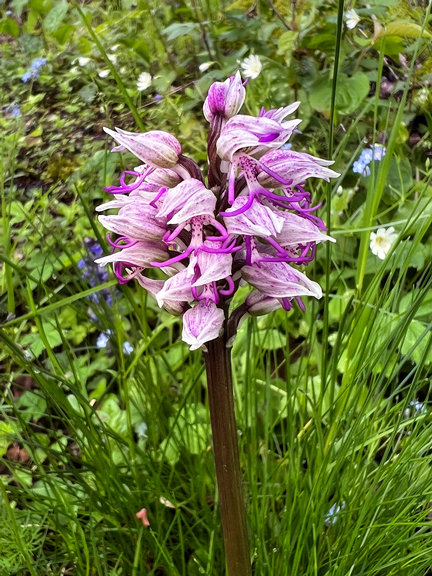
In the photo above, loose-flowered orchids and moss-covered rocks make a pretty Zen garden in the forest.
Les fleurs, c’est tout
En mai, mon ami Claude et moi avons complété la deuxième moitié d’une section du Chemin de Compostelle, ou Camino de Santiago. On a marché du Puy-en Velay à Conques. Vous pouvez lire le texte ici. Pour les deux articles de l’année dernière sur la première moitié de cette section, cliquez ici et ici.
Je fais toujours des photos de fleurs, et en mai, les fleurs étaient abondantes. Comme j’avais beaucoup de photos, j’ai décidé de faire un deuxième article entièrement dédié à la botanique. Je vais aussi essayer de faire ce billet en anglais et en français.
Sur la photo ci-dessus, des orchidées à fleurs lâches et des rochers recouverts de mousse forment un joli jardin zen dans la forêt.
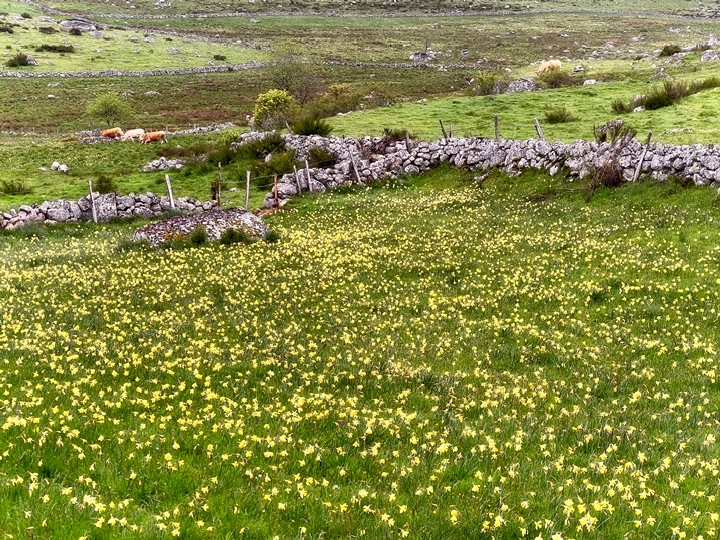
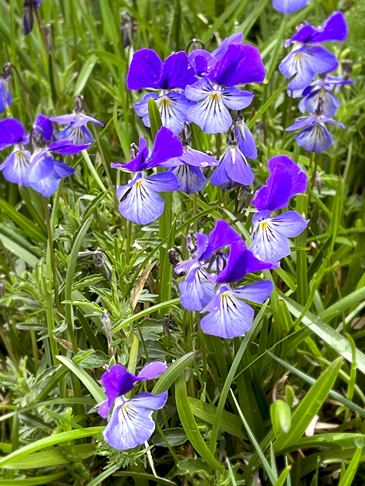
When we arrived in the area around Nasbinals, the region of rolling hills covered with rocks and cows, we found whole fields of daffodils. There were also a lot of tiny pansies in a range of colors: purple, lavender, yellow, white.
Quand nous sommes arrivés dans la région de Nasbinals, la zone des collines couvertes de rochers et de vaches, nous avons trouvé des champs entiers de jonquilles. Il y avait aussi beaucoup de petites pensées de diverses couleurs : violet, lavande, jaune, blanc.



Above: When we arrived, the broom plants were just beginning to bloom, perfuming the air with their sweet scent.
Ci-dessus : Quand nous sommes arrivés, les genêts venaient juste de fleurir, parfumant l’air de leur douce fragrance.

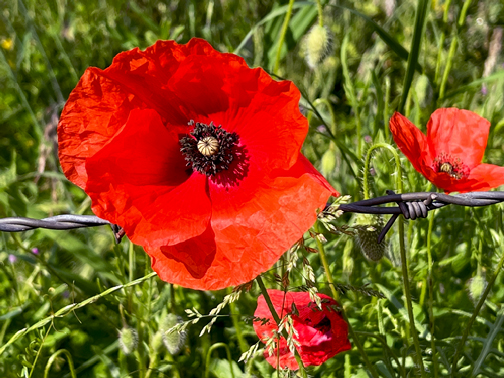
As the terrain changed, so did the flowers. In wind-blown fields and grasslands, the poppies were abundant.
Les fleurs changent en fonction du terrain. Dans les champs et les prairies balayés par le vent, les coquelicots abondaient.


There were plenty of wonderful trees, too, including the Giant Sequoia above, seen near Saint Peter’s Church in Bessuéjols.
Il y avait aussi beaucoup d’arbres magnifiques, y compris le séquoia géant ci-dessus, vu près de l’église Saint-Pierre à Bessuéjols.



We saw many fields of clover, especially this exquisite deep pink clover with very large flowers. Some of the flowers were more than two inches tall.
Nous avons vu de nombreux champs de trèfle, en particulier cet exquis trèfle rose foncé aux très grandes fleurs. Certaines fleurs mesuraient plus de cinq centimètres de haut.
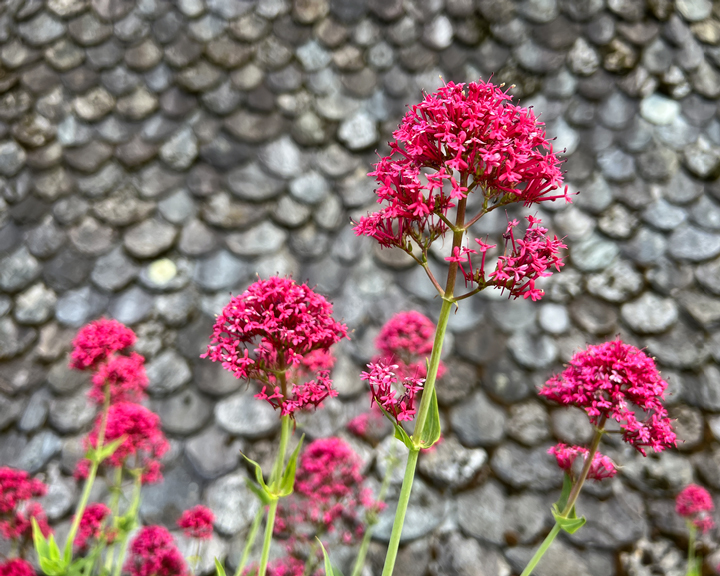
Vivid red valerian against a backdrop of a lauze-tiled roof (slate), both common in this part of France. Valerian is also called Spanish lilac here.
Valériane rouge vif sur fond de toit en lauze (ardoise), tous deux courants dans cette partie de la France. La valériane est également appelée lilas d’Espagne.

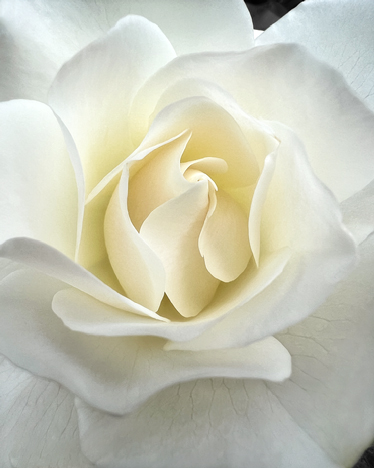
Until now, all the flowers and trees I’ve shown have been more or less wild (except maybe that sequoia). But I cannot resist roses, and we arrived in Conques when it seemed the whole village was alive with roses. It was absolutely gorgeous, and I’ll close this post with a few images of roses.
Jusqu’à présent, toutes les fleurs et les arbres que j’ai montrés étaient plus ou moins sauvages (sauf peut-être le séquoia). Mais je ne peux pas résister aux roses, et nous sommes arrivés à Conques alors qu’il semblait que tout le village était vivant avec des roses. C’était absolument magnifique, et je vais terminer ce post avec quelques images de roses.




Gorgeous photos!!! I’m loving your reports on your walk.
LikeLike
Hi Lori,
How great to hear from you! Thank for writing, and I look forward to seeing you soon!
–Lynne
LikeLike
Wow! Those are beautiful! I love the photo of the Sequoia and the tree with the monkey! Also, the red door with the red roses is striking. I can see I’ll be visiting your Etsy shop. I have a feeling you didn’t get my response to your prior blog post about this journey but anyway, I’m so happy you succeeded in finishing it this year. Love to you, Claude & Maryse.
LikeLike
Bonjour Adrienne,
I just looked, and I can’t find your response to the last post. Thank you, though, and thanks for taking a moment to write today with your kind thoughts. It’s always lovely to hear from you. I’ll pass along your greetings to Maryse and Claude, and here are bisous to YOU!
–Lynne
LikeLike
I just love a tree with what I call ‘character’. I saw the monkey, but not Treebeard. When you see animals in the clouds, it’s called pareidolia. I wonder if there’s a word for seeing animals in clouds. Hmmm… Google, can you help? lol! Love the flowers & couldn’t begin to pick a favorite.
LikeLike
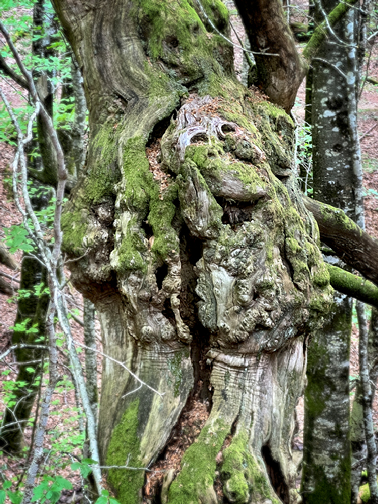
Hi Cathy, thanks for your message today! From what I can find, pareidolia applies to seeing forms in anything, so I guess it would apply to the trees as well. As for Treebeard: the big round bit at the bottom is his open mouth, and the long vertical branch directly above is his nose. His eyes are black holes on either side of the nose, and set back. It’s a complete long-shot, I know, but this is almost exactly how I imagined Treebeard when I first read LOTR. Again, thanks for writing–it’s always nice to hear from you.
-Lynne
LikeLike