Spring wrap-up

Going to the birds

I never paid much attention to birds until we moved to the Rocky Mountains of Colorado. There, living in a smaller town surrounded by nature, I fell in love with the amazing breadth of avian life, and a pair of binoculars had a permanent home in the kitchen window. When I sold the house, I wrote up several pages of notes about it for the new owners; at least half was about the birds.

Moving to another country on another continent has plenty of challenges, and it took me a while to realize the effect of not knowing the local birds. I’ve struggled to put this feeling into words. Suffice it to say that I’ve been walking around here for nearly four years with a vague sense of unease, of not fully belonging, in part because I don’t know who the birds are.

Continue reading “Spring wrap-up”
Les Lalanne : the blending of artistic skill, nature and humor

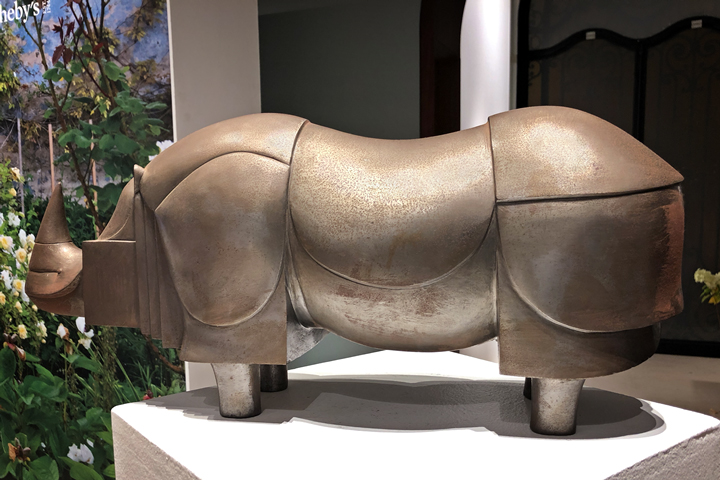
Patinated steel rhinoceros by François-Xavier Lalanne, Rhinocéros, 1981-86

Going to an auction
It happened in the Before Times. It was October 2019 BT. (I could say “BC” for Before Covid, but BC was already taken.) Anyway, my sister-in-law Kathy had a business trip to Paris, and I had arranged to meet her there for a few days. It turned out to be a brief but astonishing voyage of discovery.

Kathy was in Paris to attend a two-day Sotheby’s auction of selected works of the sculptors Claude and François-Xavier Lalanne. She was already well along in the planning of an exhibit of their work for the museum where she works, The Clark Art Institute, in Williamstown, Massachusetts, and she had good reasons for being present at the auction.

Continue reading “Les Lalanne : the blending of artistic skill, nature and humor”

One fine spring day

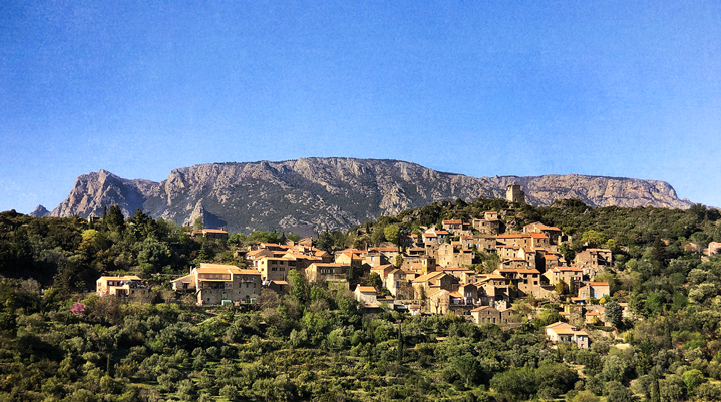
The village of Vieussan clings to its perch in the foreground. Behind it is the mass of Mont Caroux (the Sleeping Lady) in the Parc Naturel Régional du Haut-Languedoc.

A lovely day in this corner of paradise
Saturday, 3 April was our last day of freedom in France— our third covid lockdown was looming. The weather was fine, and a small group of us decided to have a day trip, driving nearly two hours to begin our adventure in the hamlet of Douch, situated north of us in the sprawling Parc Naturel Régional du Haut-Languedoc.

Before putting our boots on the trail, we were enticed by the hamlet, built entirely of local stone. We spent a happy half-hour strolling past ancient structures, some in perfect condition, others showing the effects of time and gravity with warps and dips and missing stones. Douch is a place right out of a fairy tale.

Continue reading “One fine spring day”

Historic photos of Carnaval

English version. La version française suit.

This year is a little different
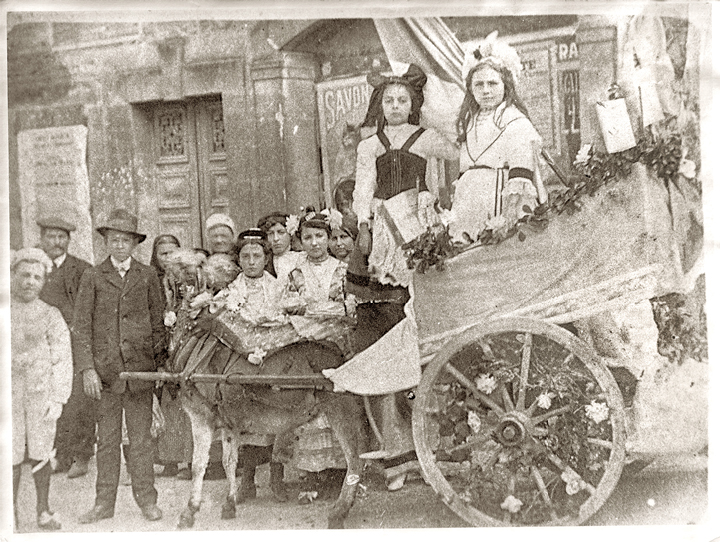
Thanks to the pandemic, there are no events with crowds of people who are singing, dancing, drinking, kissing each other, and generally having a wonderful time together, and that includes Carnaval. It seems like the perfect opportunity for me to offer a brief look at the last century of celebrating Carnaval in Bize.

Continue reading “Historic photos of Carnaval”

Pedometer for a year

Much has been written about seeing 2020 fully in the rearview mirror, and I don’t have much new to add, which has left me pondering just what to do with this January blog post.

As the year was lurching to a close, I spent close to six weeks not being able to walk much, and since walking is my primary exercise, I was eager to get my feet back onto the trail. That happened a few weeks ago, and I’ve been racking up the kilometers as much as time and weather permit. On one such walk, it occurred to me that I could tell a story of 2020 through some of my walks of the past year.

Continue reading “Pedometer for a year”

Winter solstice and small miracles

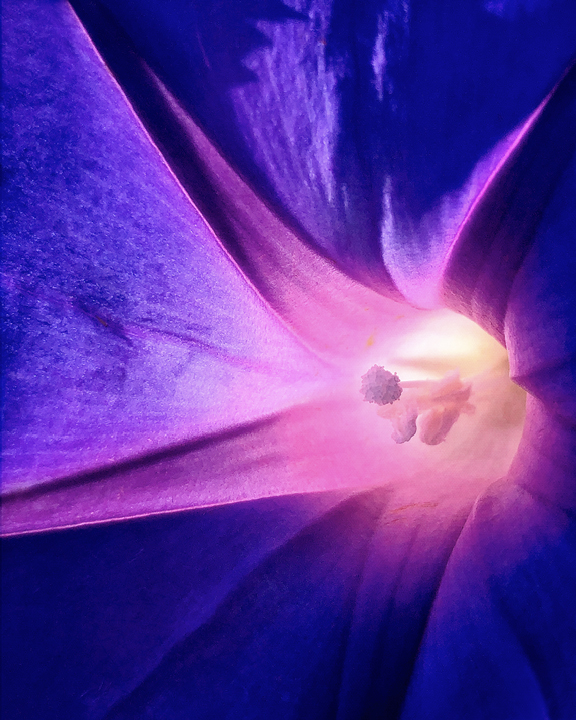
The glowing center of this morning glory—still blooming where I live—looks much like a pink star in a midnight sky.

Where were you in the year 1226?
There is a rare treat awaiting us on this year’s winter solstice. It’s called the Great Conjunction, and the last time humans could see it like this was on March 4, 1226.

When two planets in our solar system appear close to each other—from Earth’s perspective—it’s called a conjunction. When it happens with the two biggest planets, Jupiter and Saturn, it’s called the Great Conjunction, which occurs around every 20 years. However, it’s quite rare when they appear to be overlapping each other AND are visible from earth. The last time they looked this close to each other was during Galileo’s time, in 1623, but the planets also lined up so close to the sun that they weren’t visible from Earth. The next time this will happen is relatively soon: 2080.

Continue reading “Winter solstice and small miracles”